Winter in Switzerland is not only about skiing and snow-covered mountains. It is also the season of Fasnacht — the colorful, loud, and joyful carnival tradition that takes over towns and villages before the beginning of Lent. Across the country — from the world-famous carnival in Basel to the smallest local celebrations — Fasnacht has been celebrated for centuries. It is rooted in medieval times: a final explosion of noise, satire, masks, music, and freedom before the quiet period of fasting begins. And here in Baar, our small but vibrant town in canton Zug, this tradition lives just as brightly — warming even the coldest winter days.
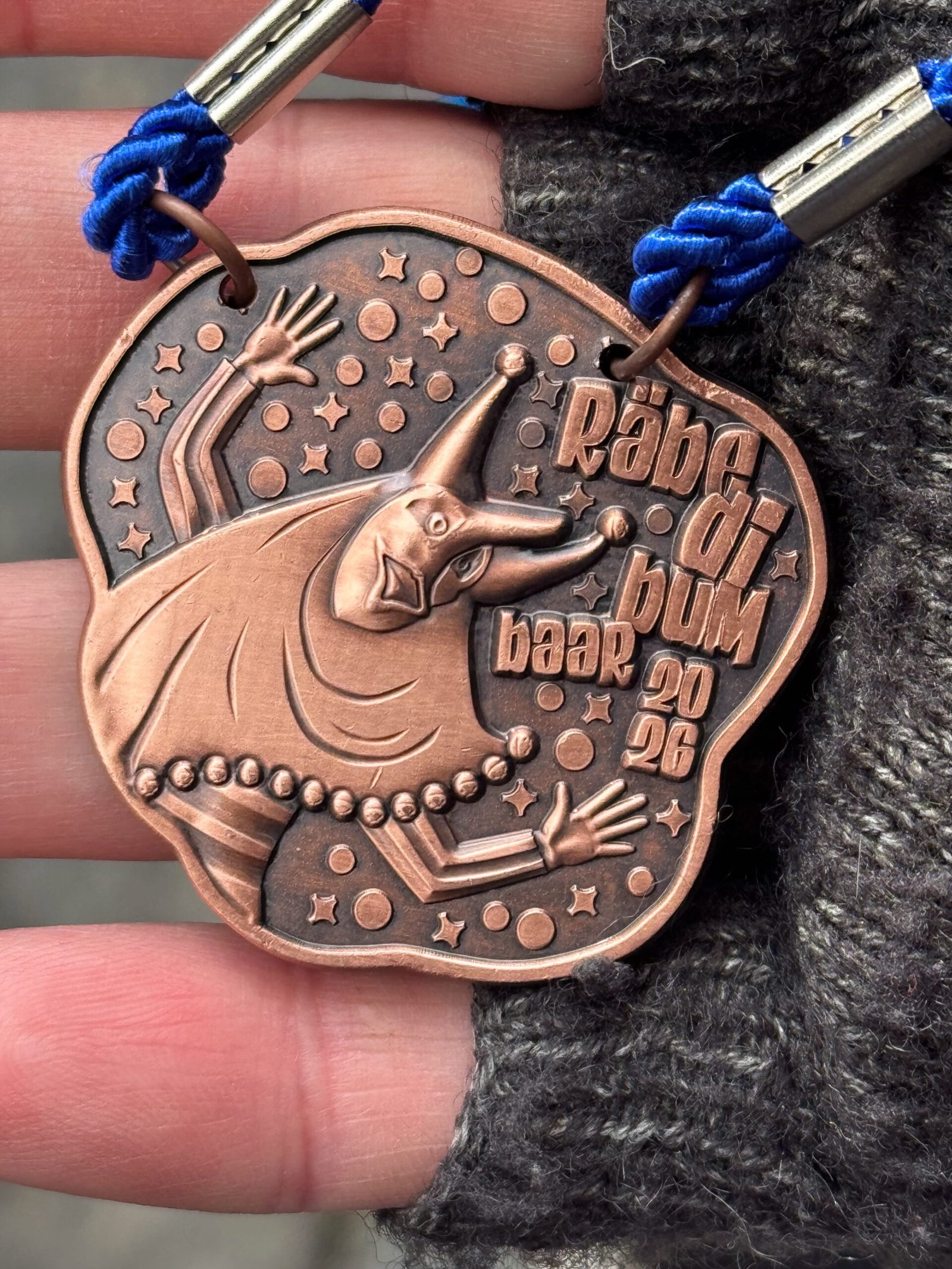
Fasnacht in Baar has a long local history and has been celebrated for generations. Weeks before it begins, you can already feel it in the air. Costumes appear in shop windows. Guggenmusik bands rehearse late into the evening. Children count the days until the first parade. And somehow, even adults begin to smile a little more. For us, this year marked something special — our fourth Fasnacht in Baar. And yes — our fourth medal to keep as a memory. Four winters. Four medals. Four chapters of our Swiss life. These medals have quietly become something more than souvenirs. They are like a small calendar of our integration — proof of seasons lived here, of traditions understood a little better each year, of faces that slowly became familiar. What once felt new and slightly overwhelming now feels warm and expected. And with every medal comes the quiet hope that we will witness many more parades together in the years ahead.
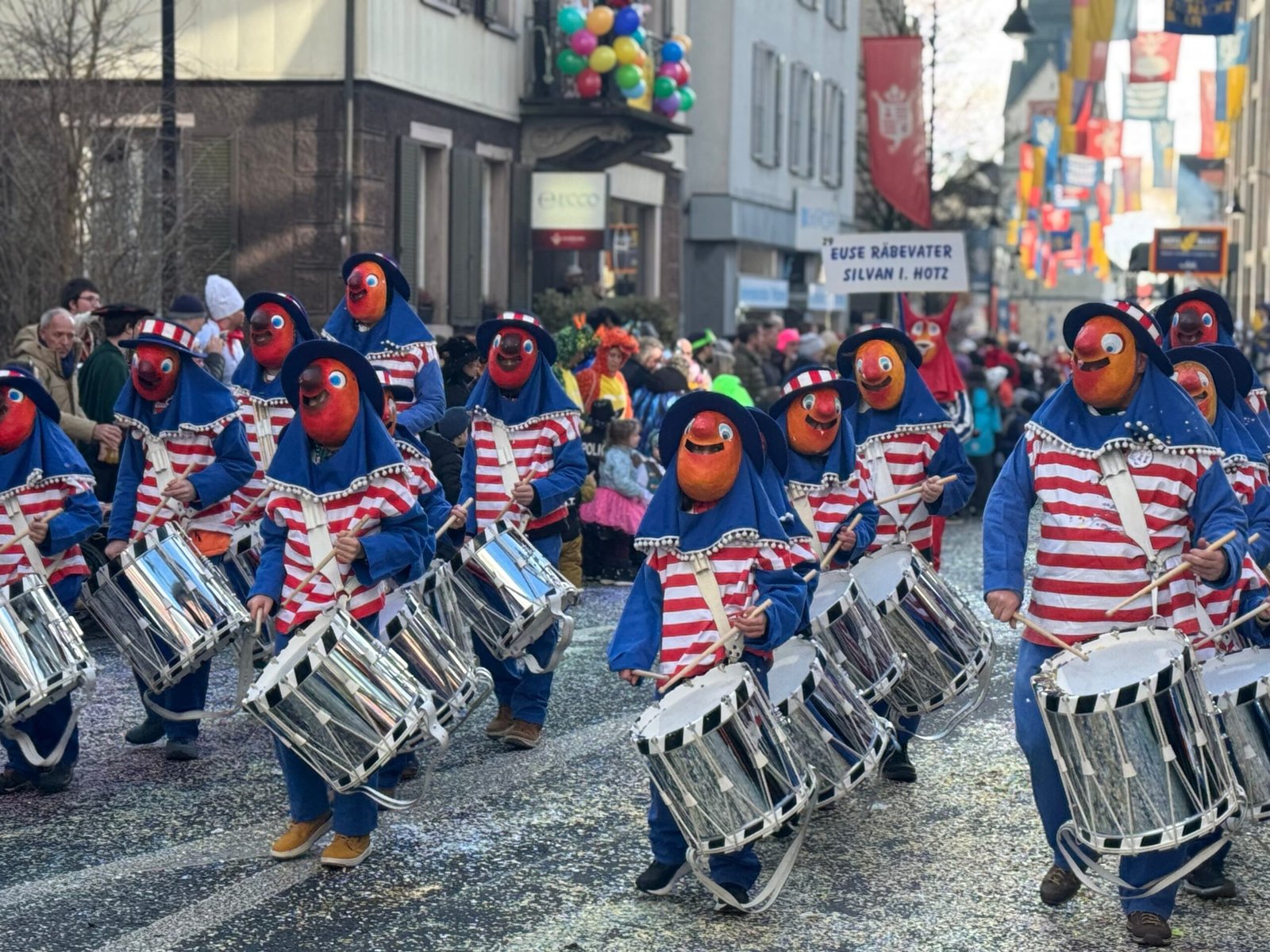
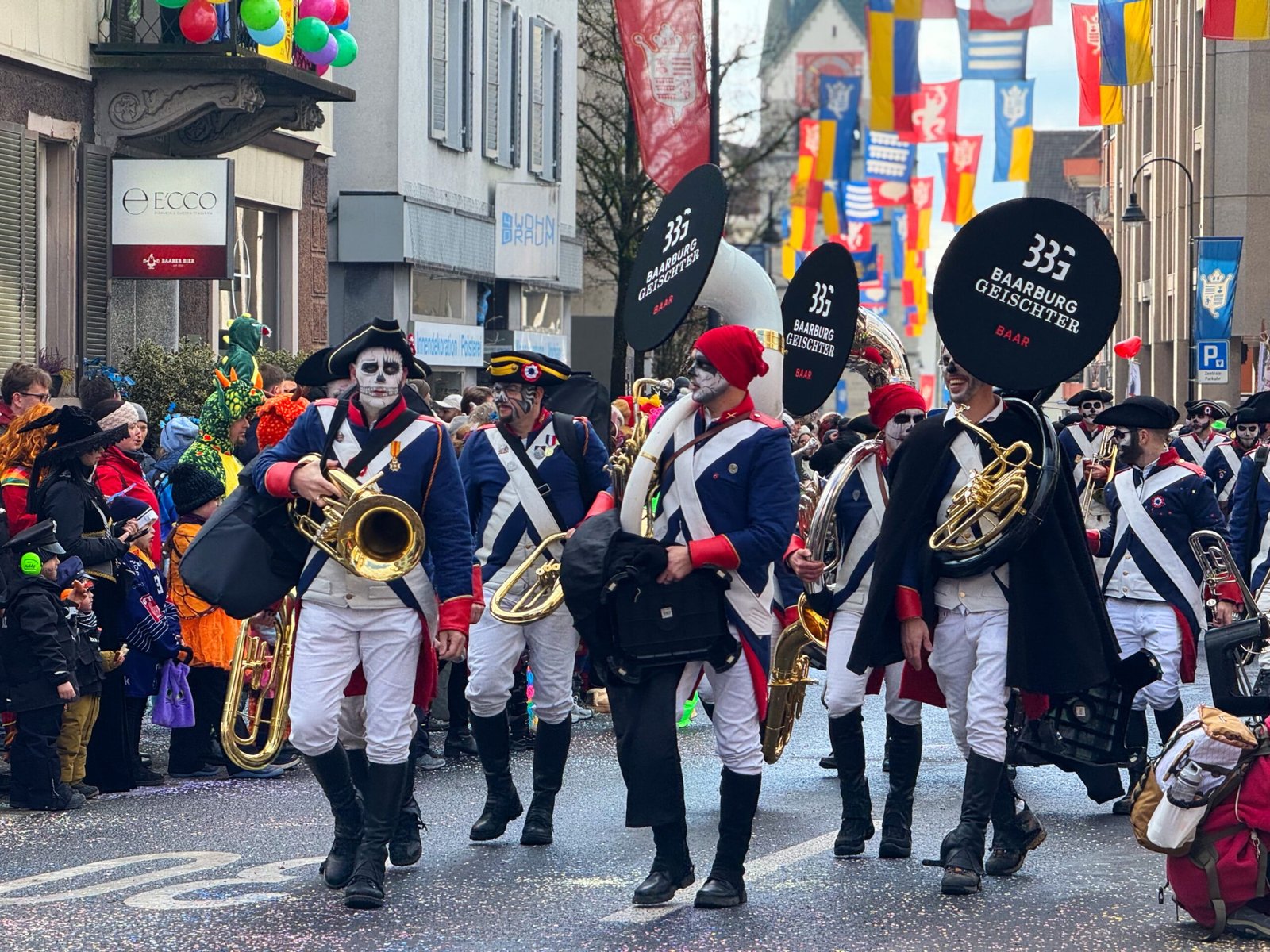
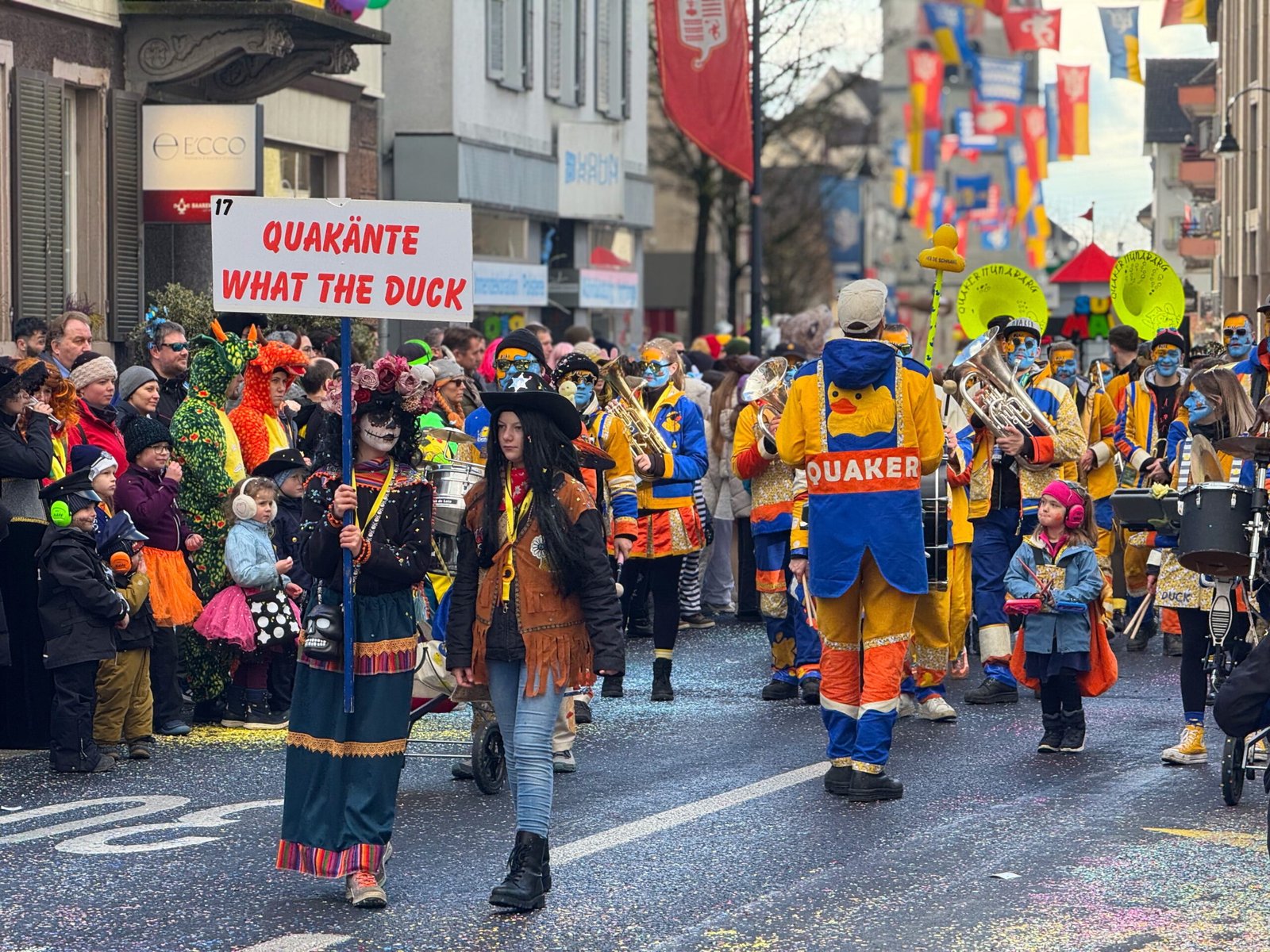
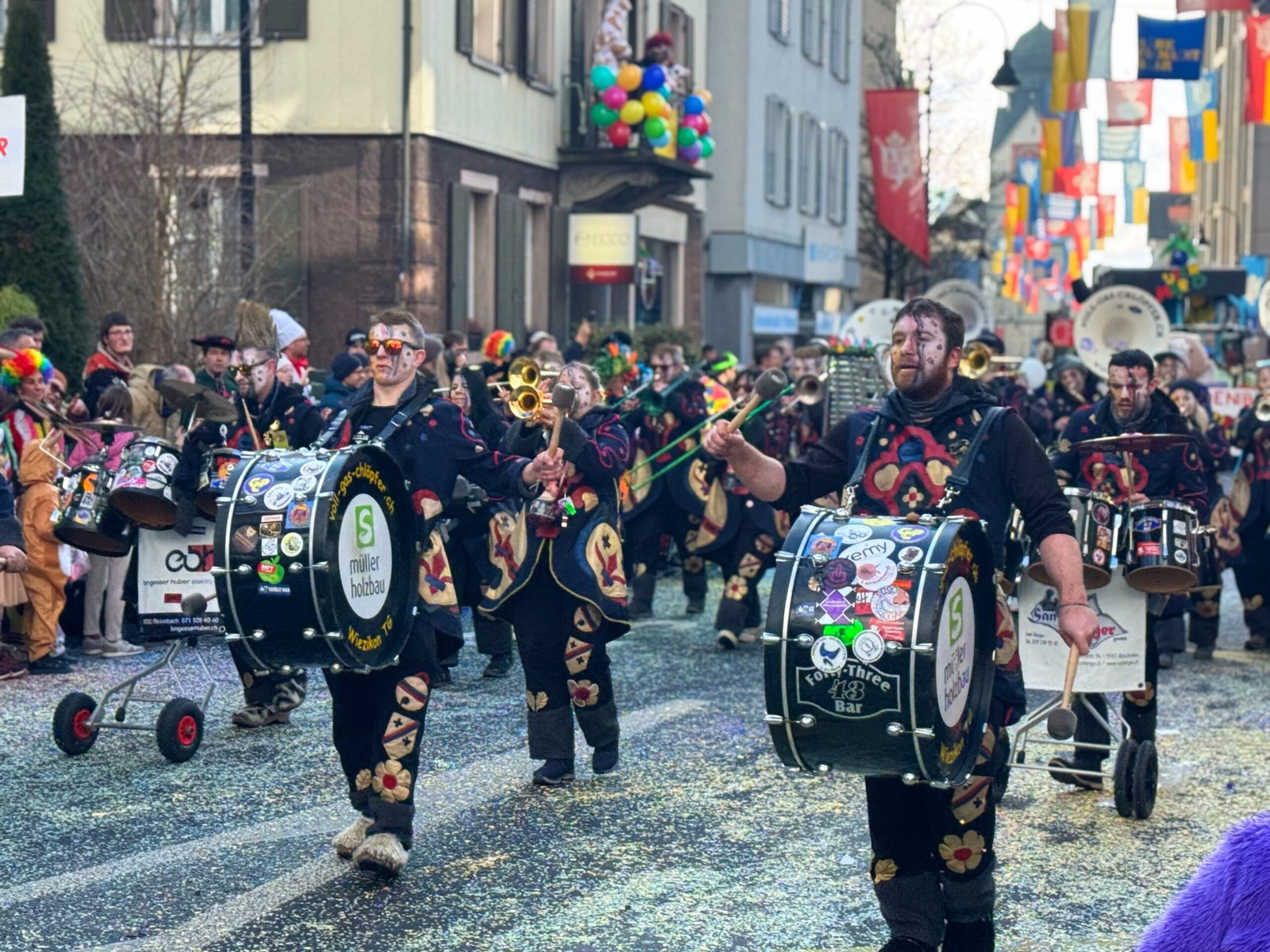
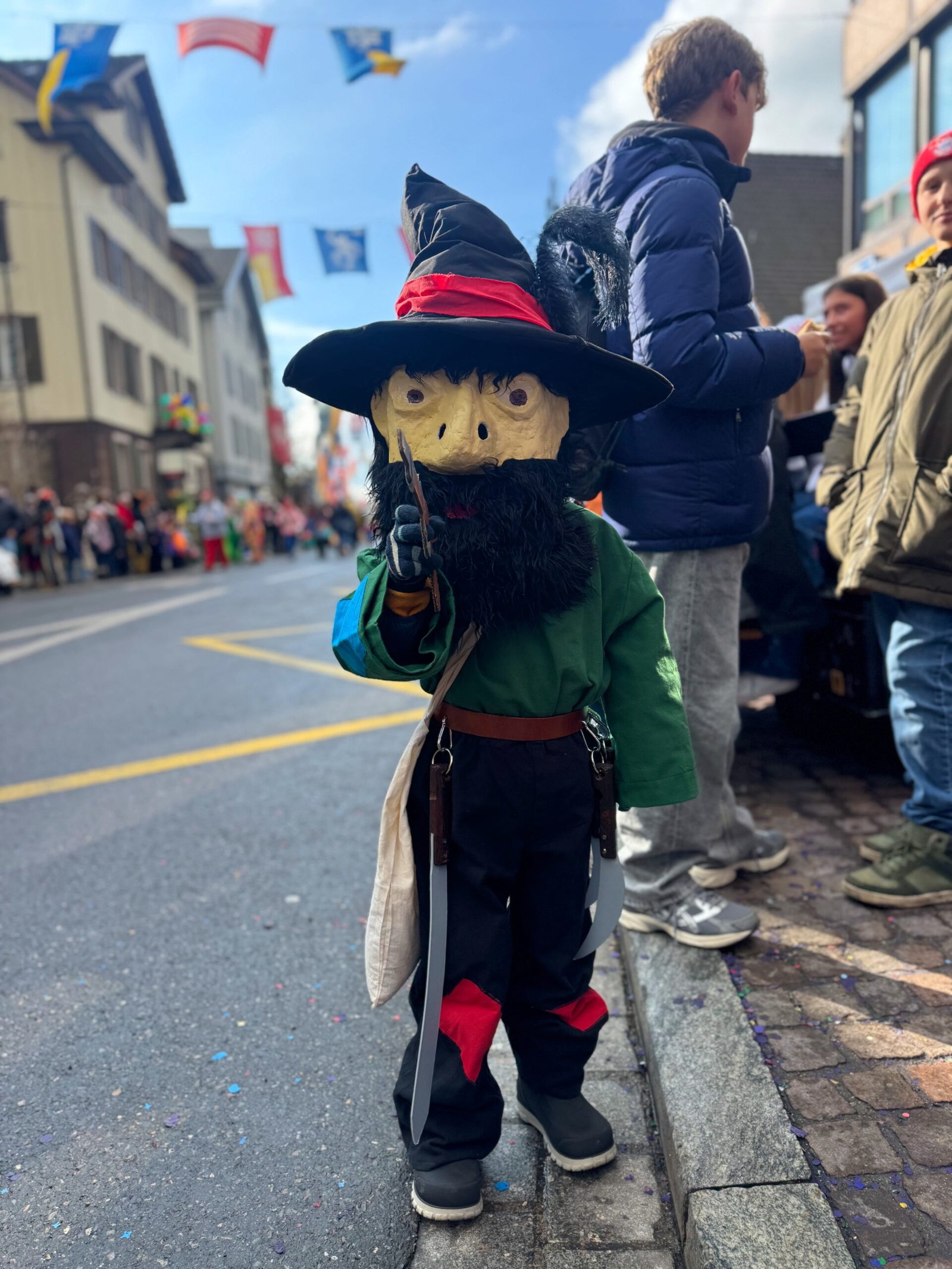
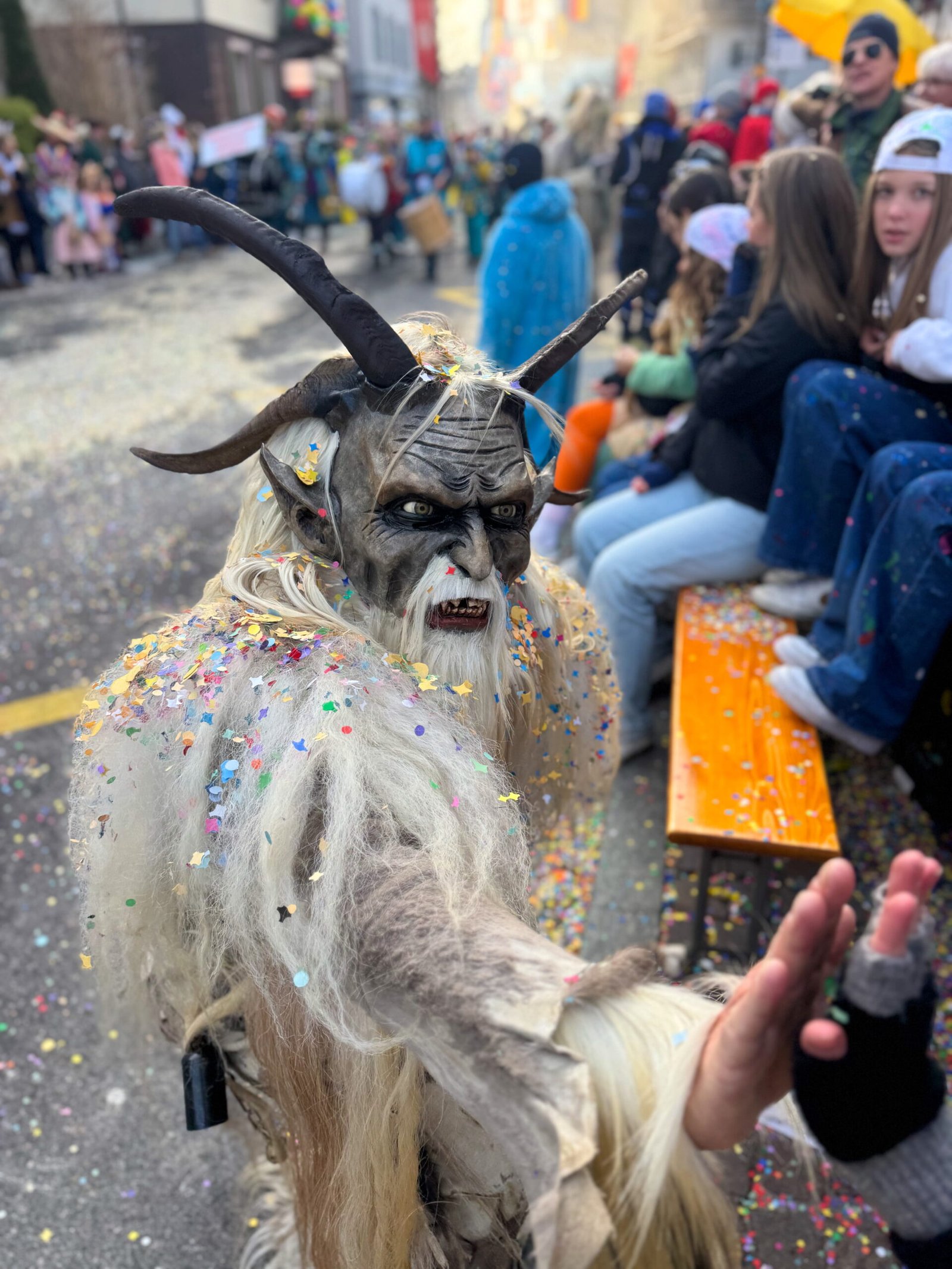
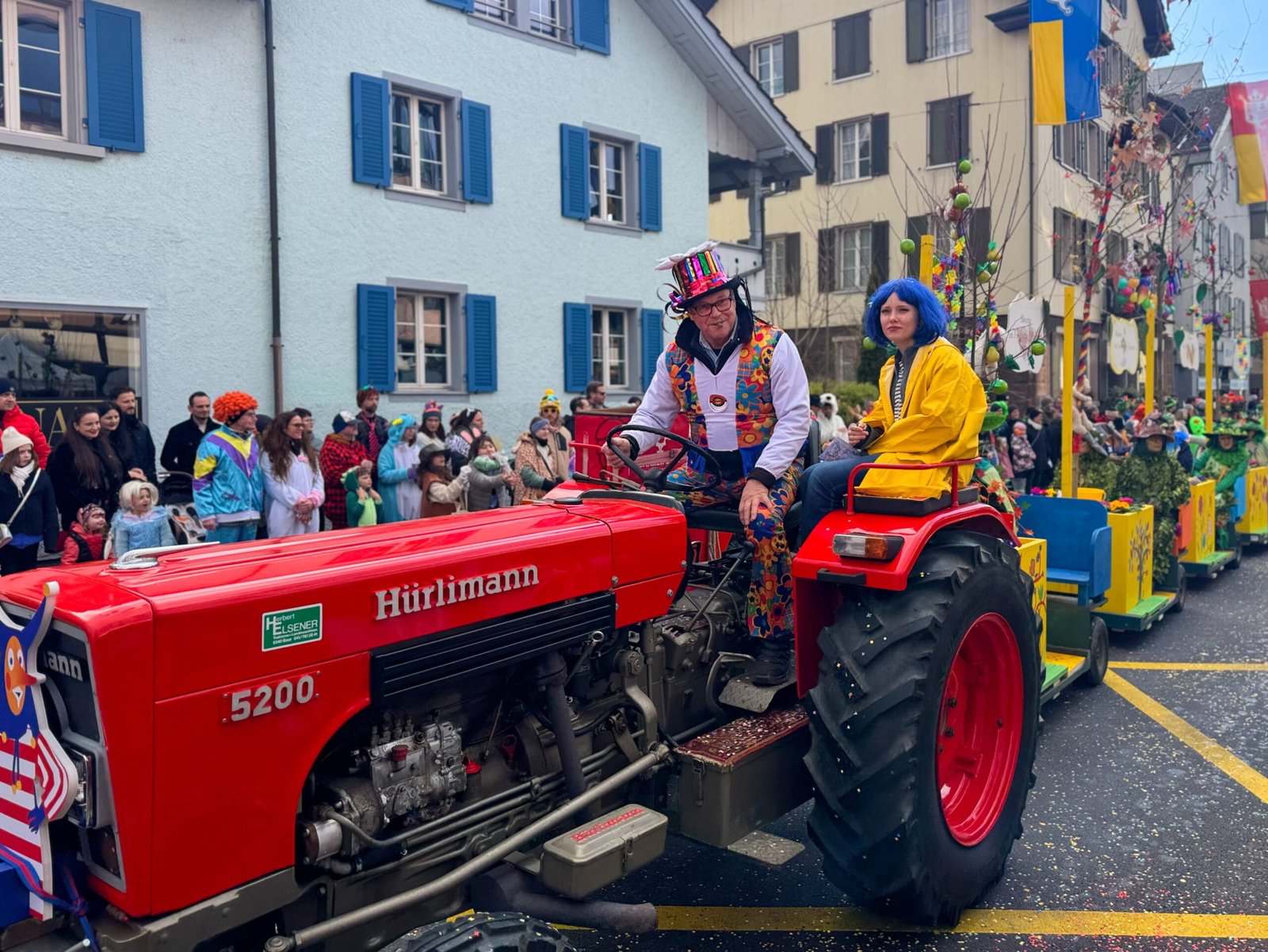
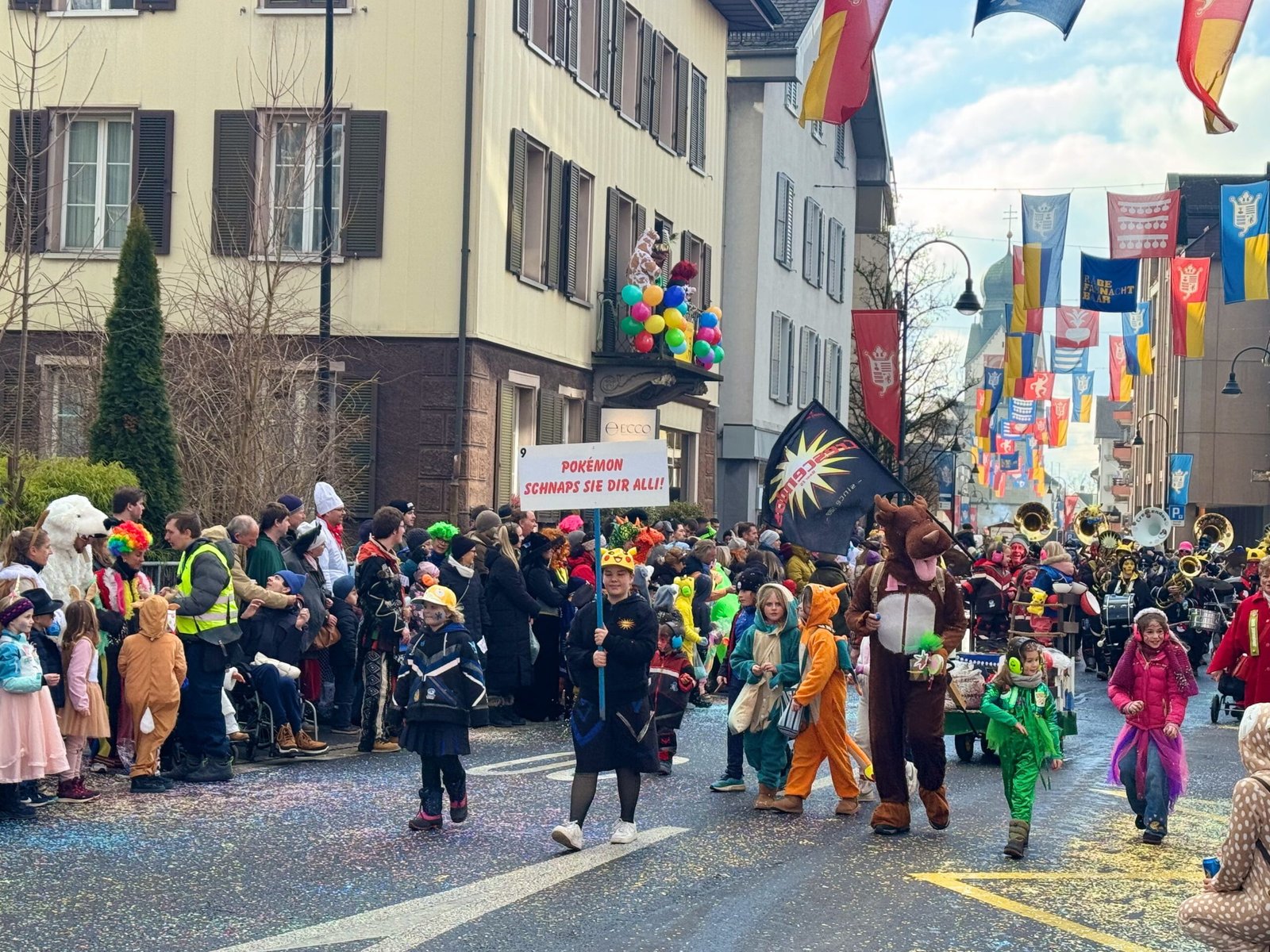
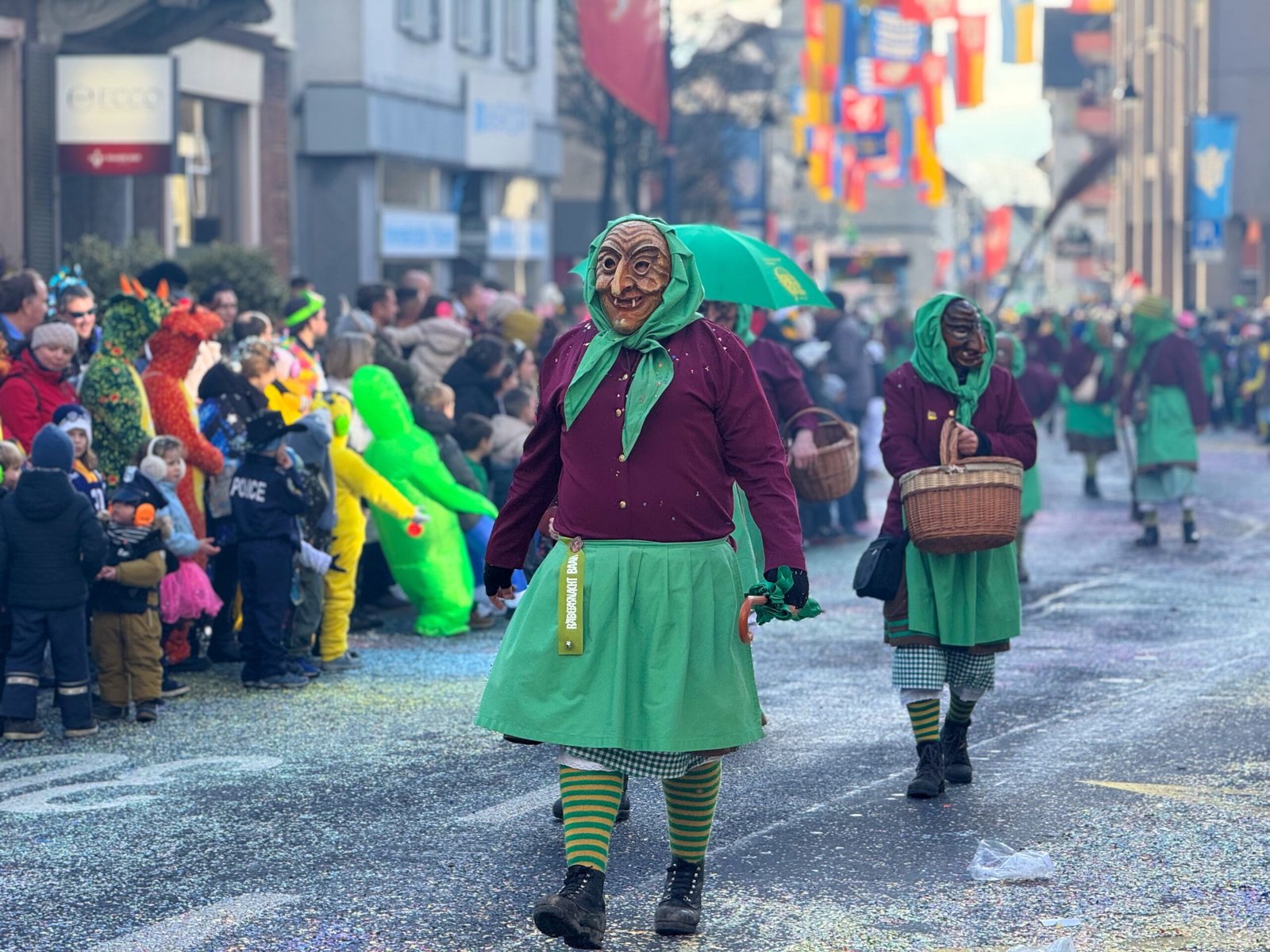
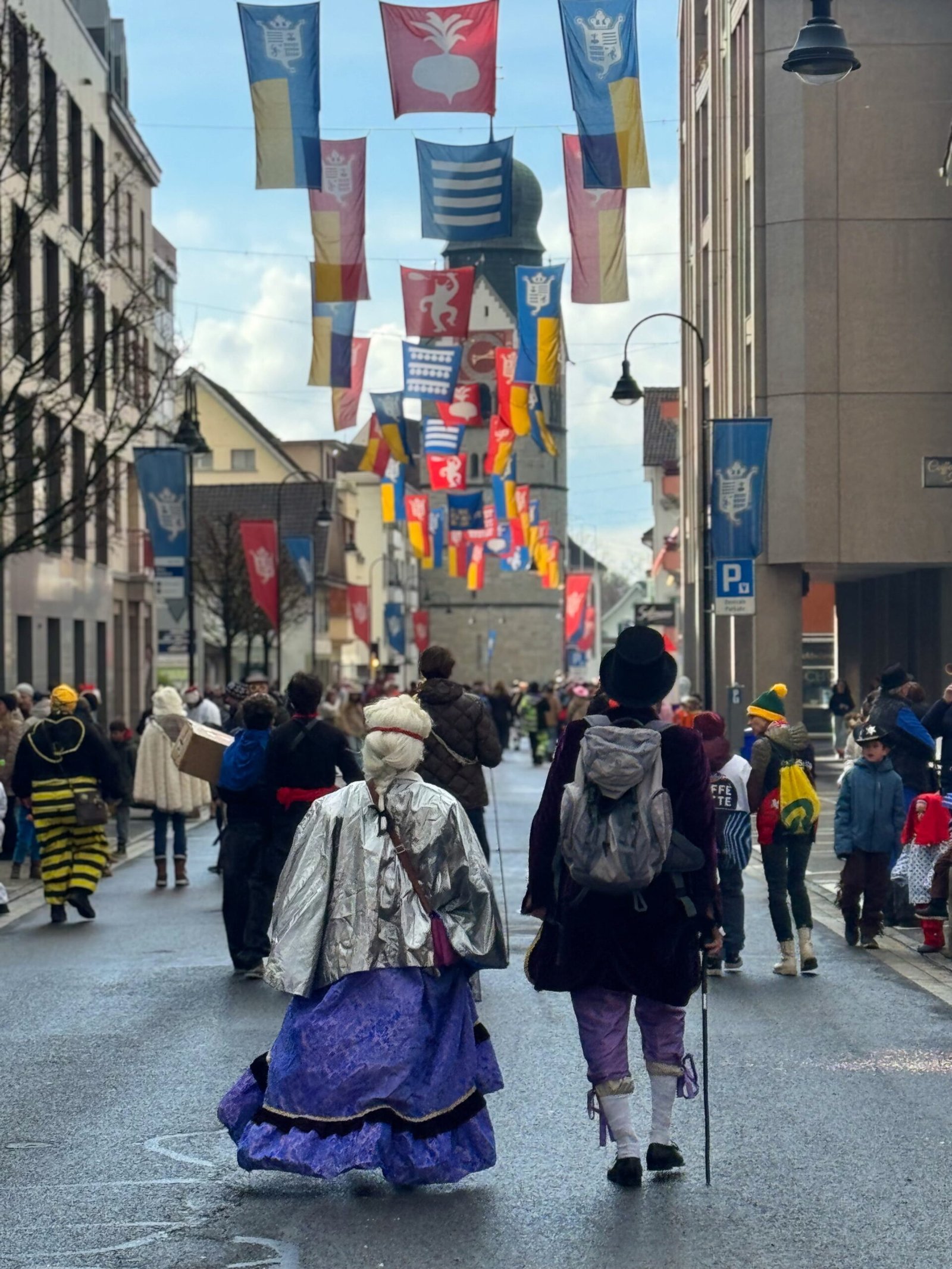
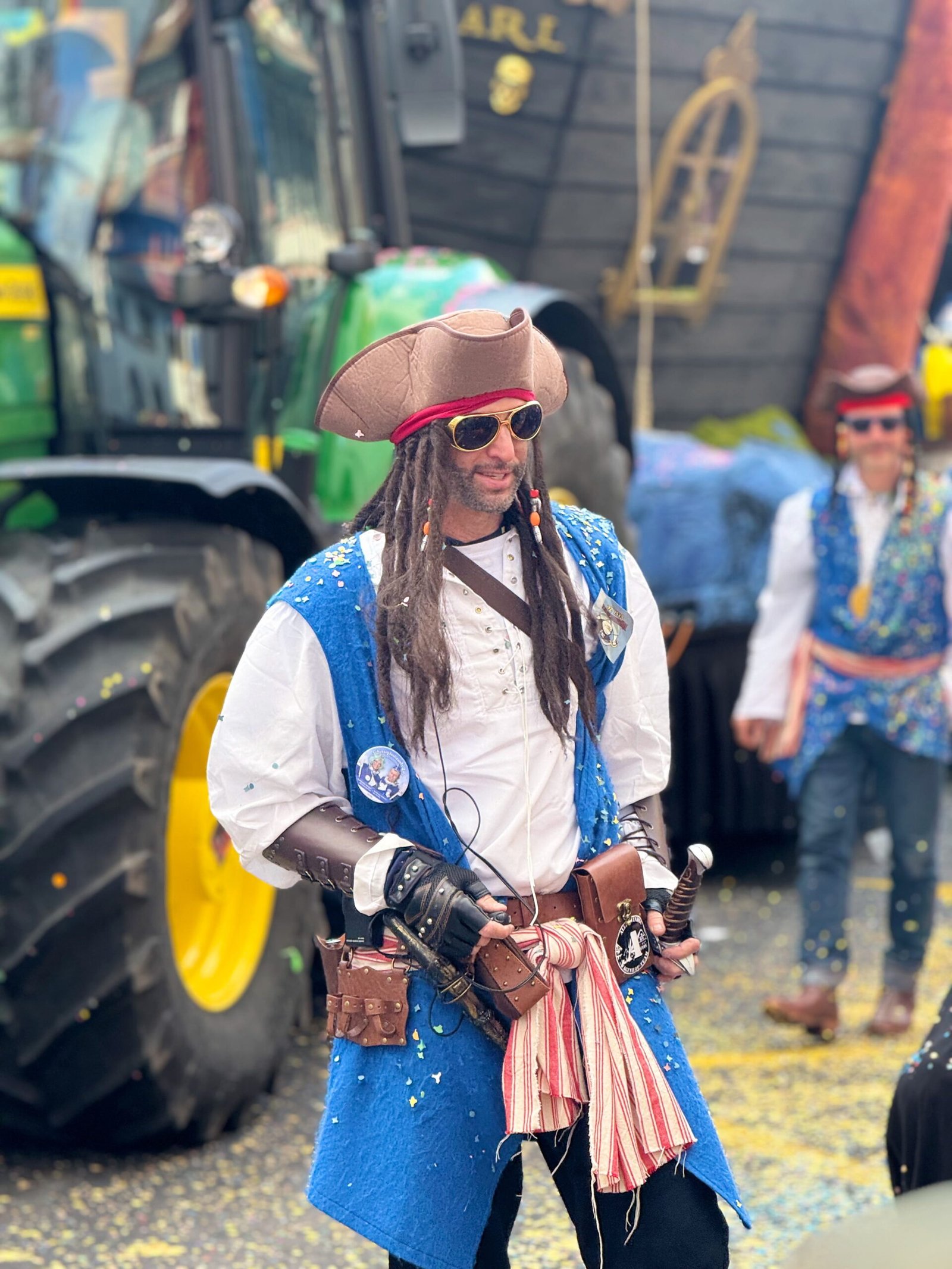
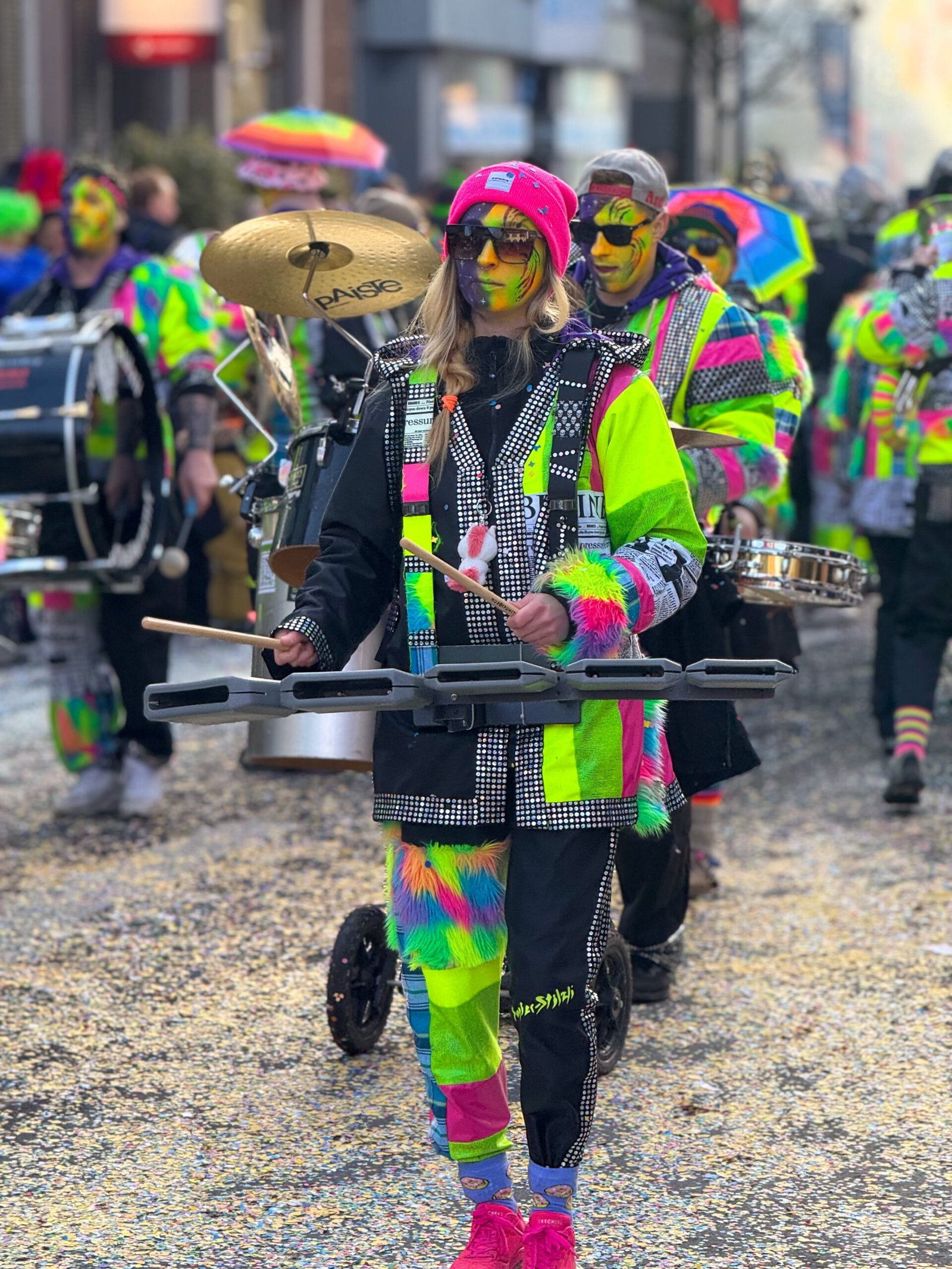
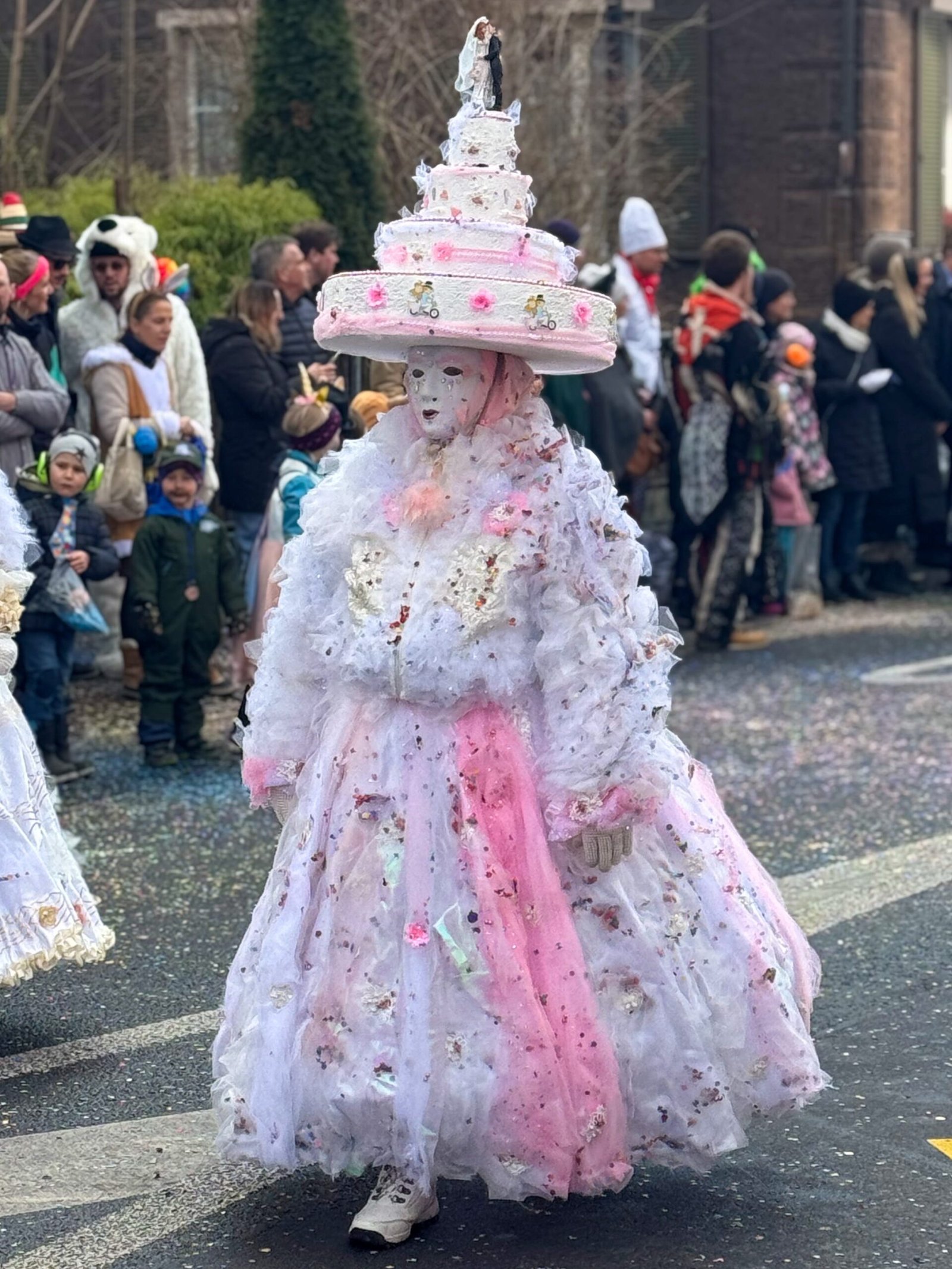
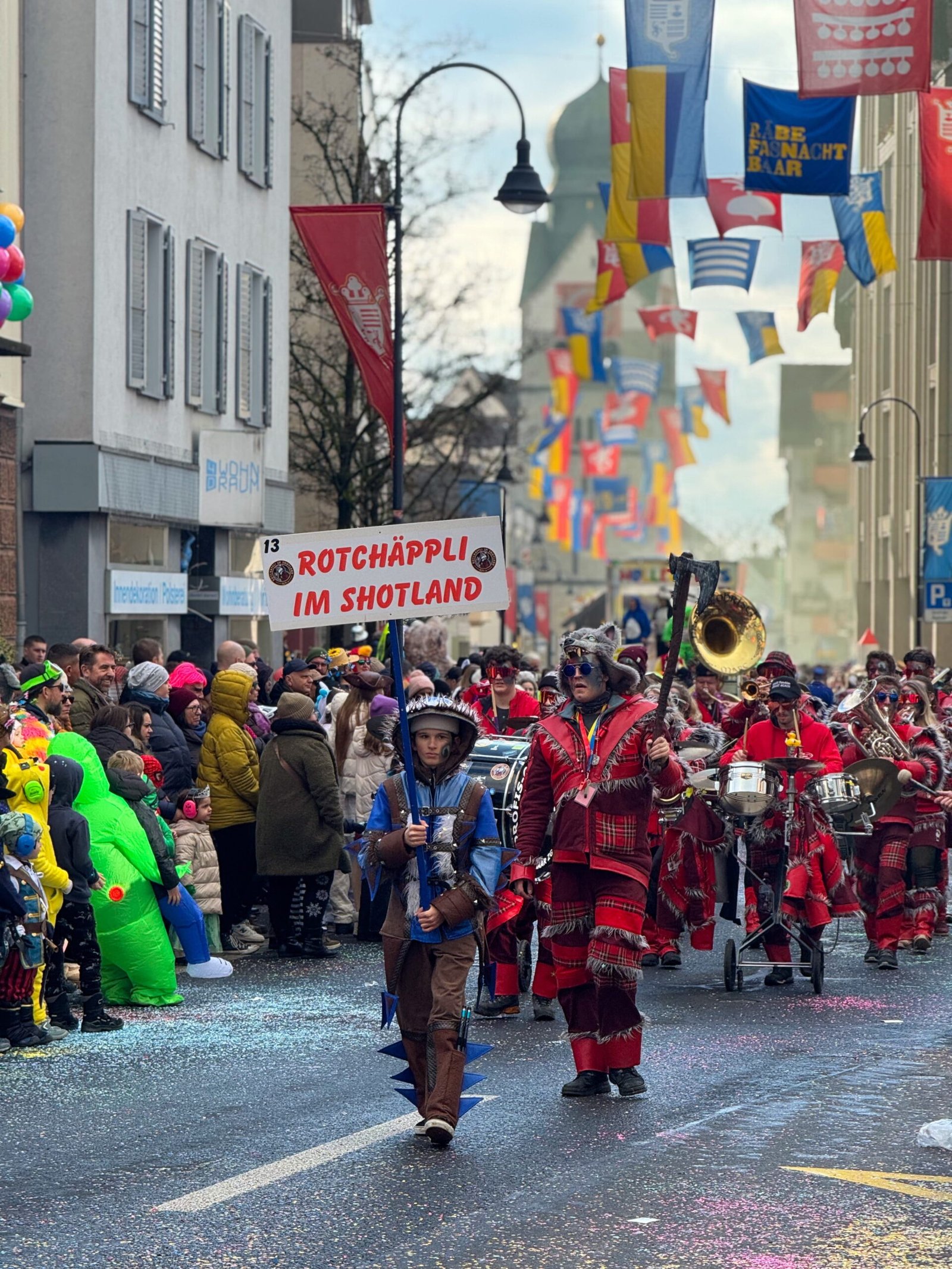
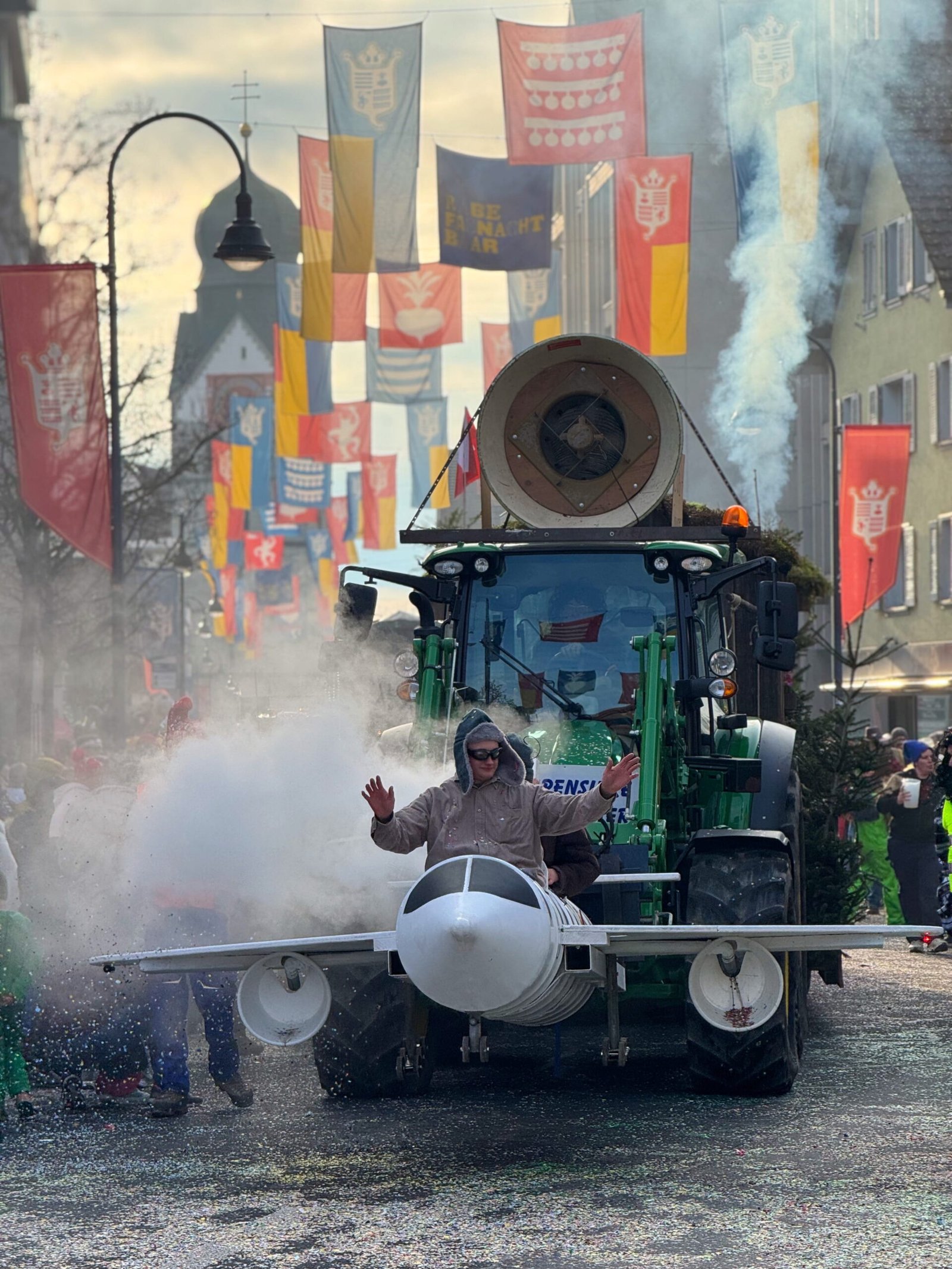
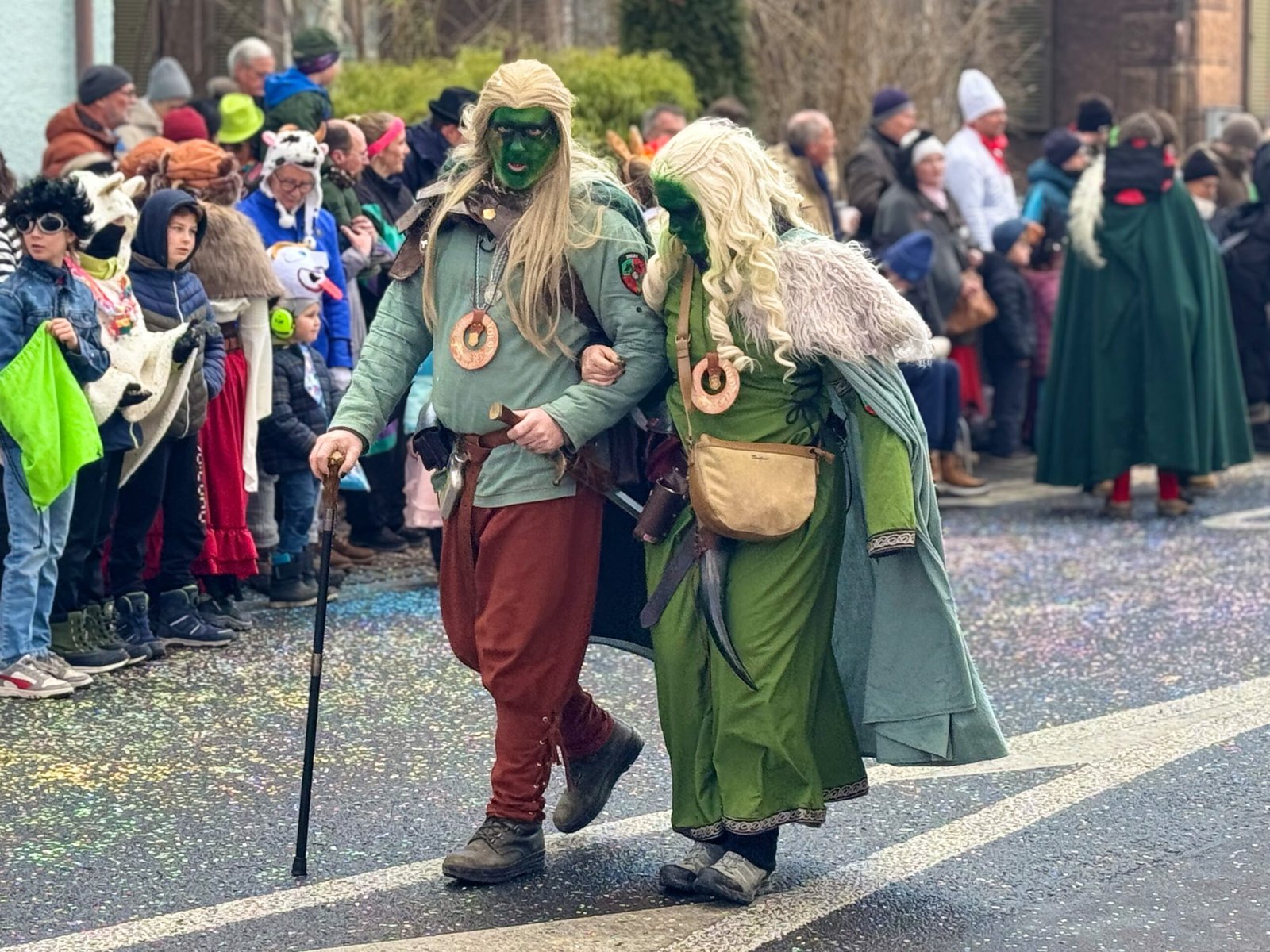
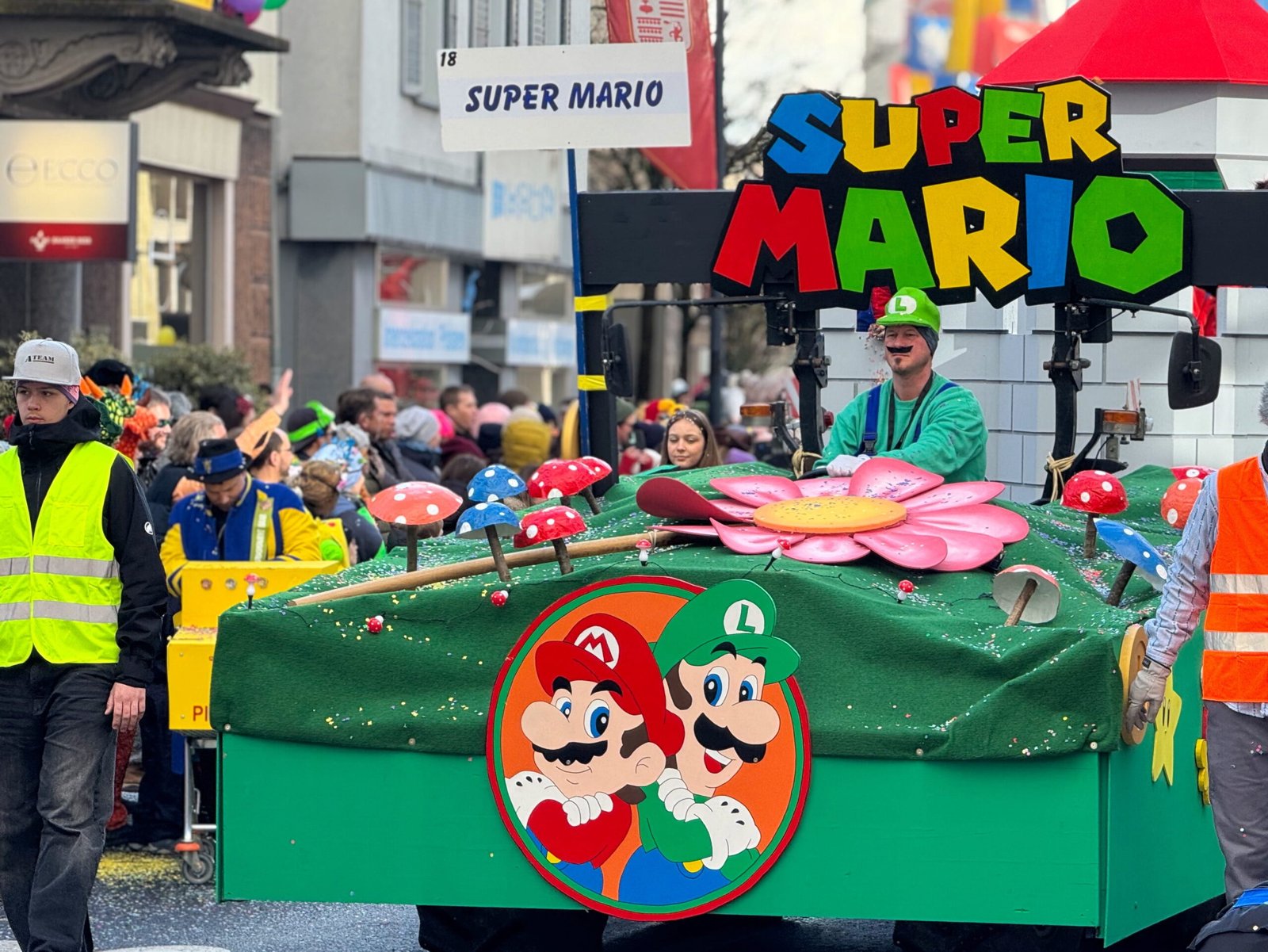
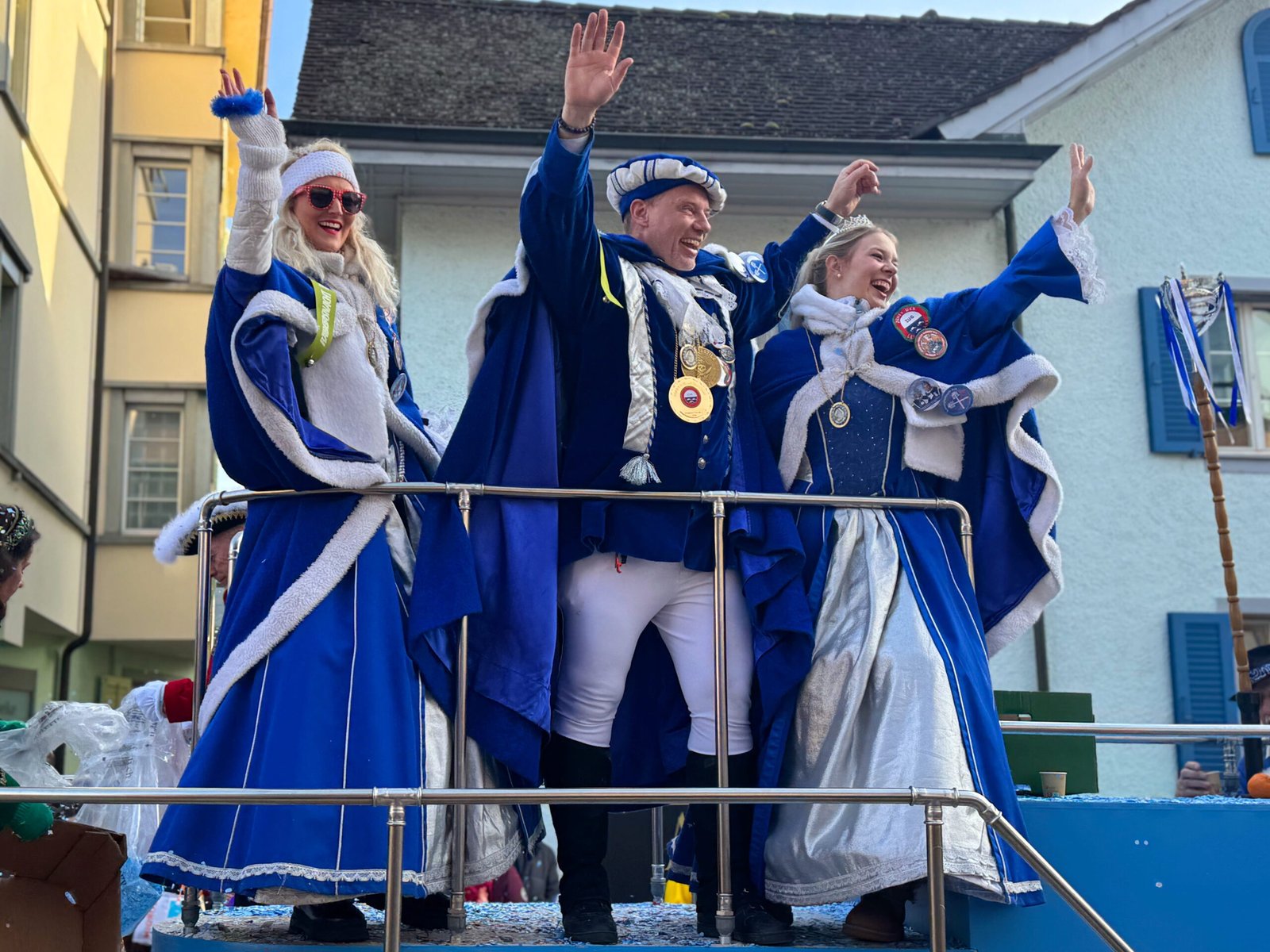
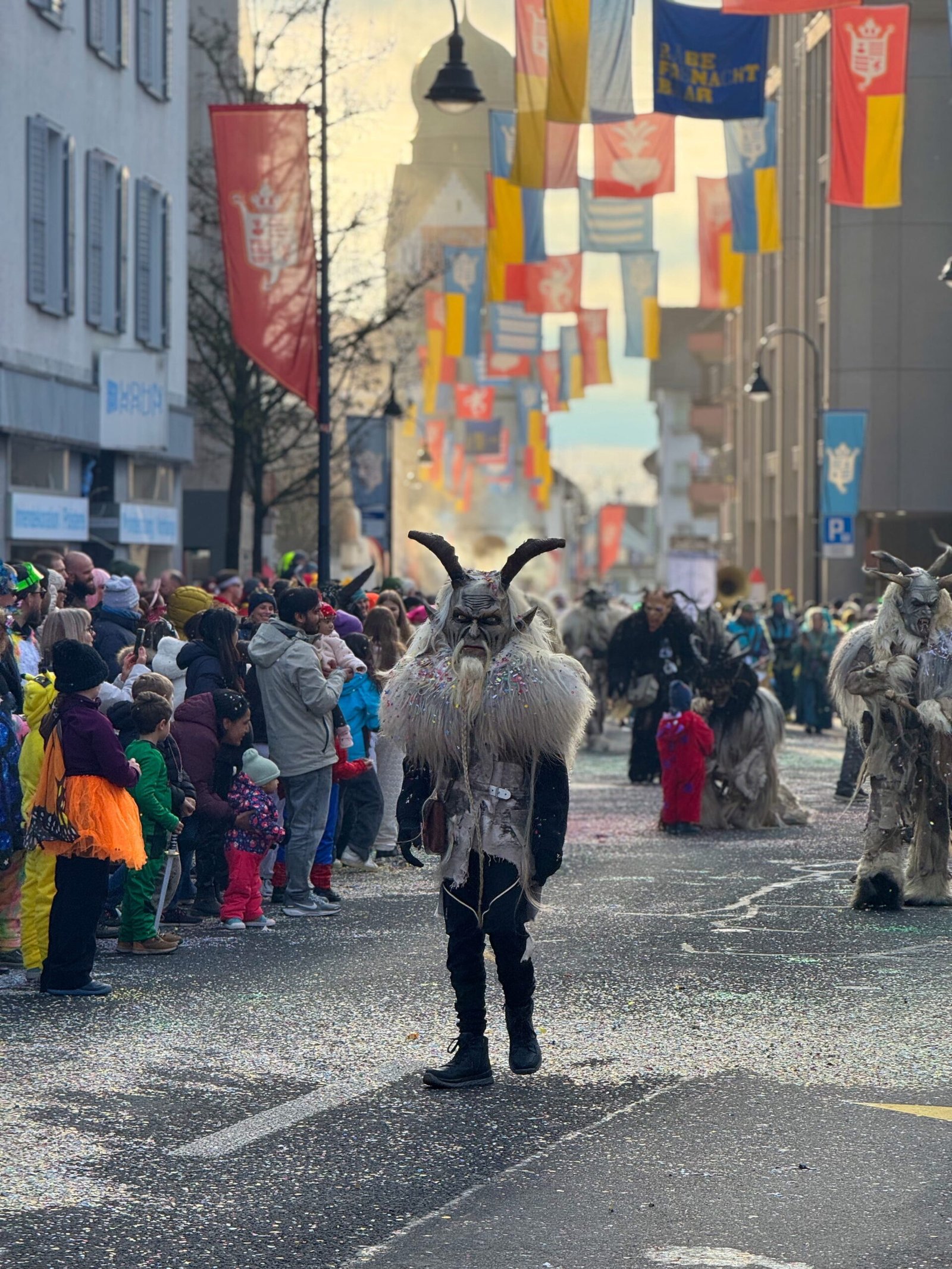
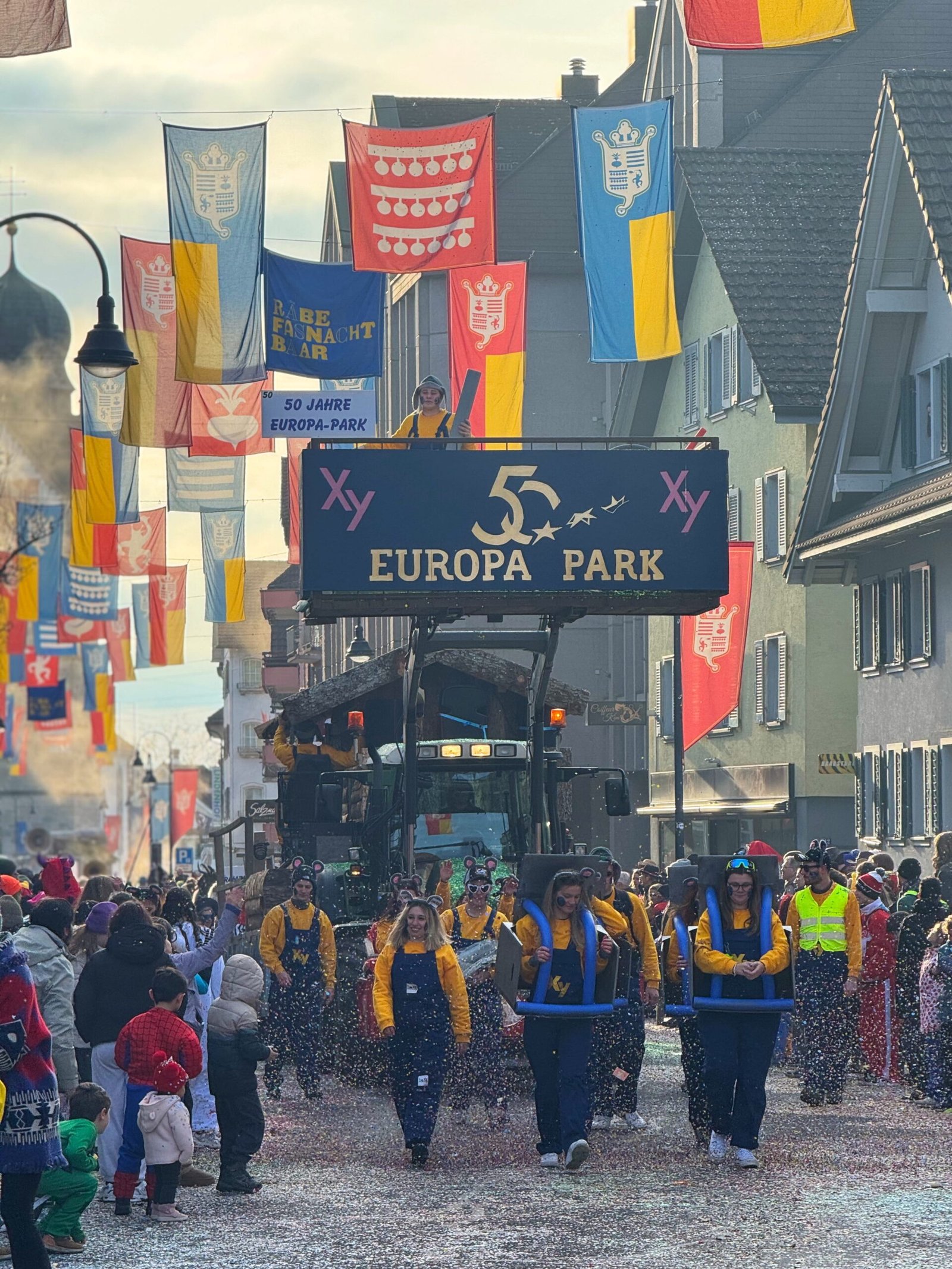
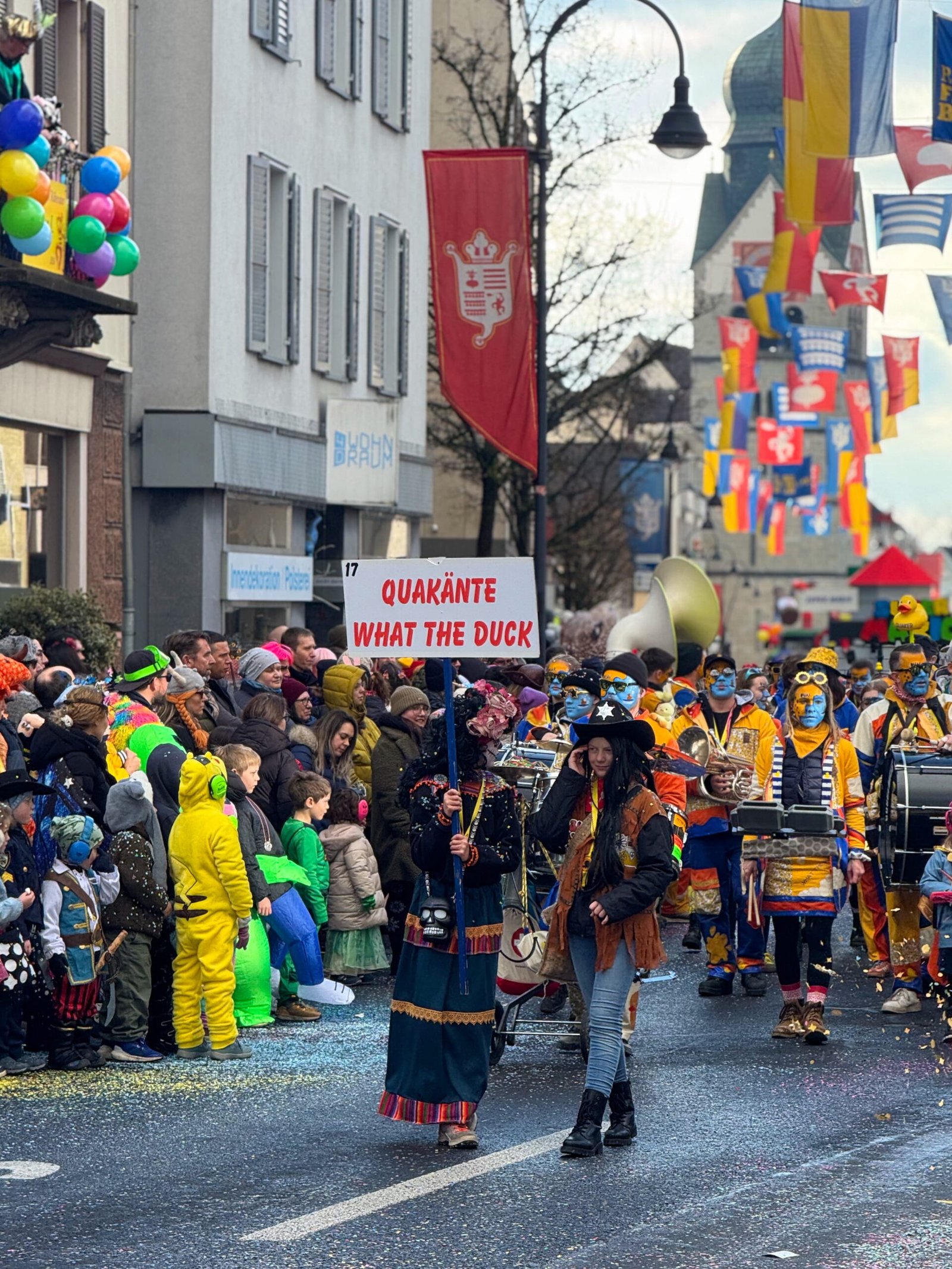
The main parade — held on the second day — is the true highlight. Around 50–60 themed groups march through several central streets of Baar. Each group carries its own idea and spirit: political satire, fantasy creatures, fairy tales, local humor, playful irony, or wonderfully absurd creativity that only Fasnacht can produce. Music echoes between the buildings. Brass bands in wild costumes play energetic Guggenmusik that you don’t just hear — you feel it in your chest. Confetti floats through the air like colorful snow. Laughter blends with drum beats. And it’s not just the performers — the entire town dresses up. Adults, teenagers, toddlers — everyone becomes part of the spectacle. Fasnacht here is not something you watch. It’s something you live.
What we love most is that Fasnacht in Baar feels like a giant family gathering. You meet neighbors. You run into friends. You greet teachers, colleagues, familiar faces from the playground or supermarket. For four days, the town feels smaller, warmer, closer. On the third day comes the Kinderumzug — the children’s parade. School kids proudly march in their costumes, already sensing that they belong to something bigger than themselves. It’s beautiful to see how naturally tradition is passed on — not through explanations, but through laughter, music, and shared excitement. And watching our child during the main parade is its own little story. The mission is clear: 🍬 Collect as many sweets as possible. 🎉 Throw as much confetti as possible. With every passing year, the excitement grows. What once was simple curiosity has turned into focused anticipation — planning where to stand, how to move, how to catch more sweets, how to stay just close enough to the action. There is something deeply touching in seeing that enthusiasm grow year after year — as if Fasnacht is becoming part of childhood memories that will one day feel nostalgic. By evening, the streets of Baar are completely covered in colorful confetti. Shoes crunch as you walk. Jackets sparkle. Hair becomes a small souvenir of the day — tiny pieces of joy that you will still find the next morning.
One of the most symbolic moments comes after the main parade. A large decorative head is hung above the central street, watching over the town during the days of celebration. It feels almost theatrical — like a silent guardian of laughter and chaos. On the evening of the final day, this head is ceremonially burned. Fire, smoke, applause — and a gentle sense of closure. Something wild and beautiful comes to an end. Winter feels lighter afterwards. Spring feels closer. And the town slowly returns to its quiet rhythm.
For us, Fasnacht in Baar is more than a carnival. It is a marker of time. Each medal reminds us that another year has passed. Another winter lived here. Another step deeper into belonging. We came once as curious newcomers. Now we greet others, recognize faces, feel part of the flow. And perhaps that is the most beautiful part of it all — not just the confetti or the costumes, but the quiet realization that this place has become home. Four medals already hang on our wall. And with them — the hope that many more winters, many more parades, and many more joyful evenings under falling confetti still lie ahead.
🎭 Facts about Baar Fasnacht
Location: Baar is a municipality in the canton of Zug, central Switzerland, located between Zurich and Lucerne.
Tradition: Fasnacht is celebrated across Switzerland before the beginning of Lent and has roots in medieval European customs.
Duration: Baar Fasnacht typically lasts four days, filled with parades, music, costumes, and community gatherings.
Main Parade: The highlight takes place on the second day, when around 50–60 themed groups march through the central streets of Baar.
Guggenmusik: Energetic brass bands in creative costumes play loud, rhythmic carnival music that defines the atmosphere.
Kinderumzug: On the third day, local schoolchildren participate in a special children’s parade, strengthening the tradition across generations.
Confetti & Sweets: During the main parade, children collect sweets while colorful confetti covers the streets like bright winter snow.
The Hanging Head: After the main parade, a large decorative head is displayed above the main street and ceremonially burned on the final evening.
Souvenir: Each year, commemorative medals are issued — small keepsakes that mark another winter and another chapter of belonging.
Best For: Experiencing authentic Swiss local culture, family-friendly celebrations, vibrant costumes, and joyful winter traditions.
Зима у Швейцарії — це не лише лижі та засніжені вершини. Це ще й сезон Fasnacht — яскравої, гучної та радісної карнавальної традиції, яка охоплює міста й села перед початком Великого посту. По всій країні — від всесвітньо відомого карнавалу в Базелі до найменших локальних свят — Fasnacht святкують уже століттями. Його коріння сягає середньовіччя: останній вибух шуму, сатири, масок, музики й свободи перед тихим періодом посту. І тут, у Баарі — нашому невеликому, але живому містечку в кантоні Цуг — ця традиція світиться так само яскраво, зігріваючи навіть найхолодніші зимові дні.
Fasnacht у Баарі має давню місцеву історію й святкується вже багатьма поколіннями. За кілька тижнів до початку його вже можна відчути в повітрі. У вітринах з’являються костюми. Гурти Guggenmusik репетирують до пізнього вечора. Діти рахують дні до першого параду. І навіть дорослі починають усміхатися трохи частіше. Для нас цей рік став особливим — наш четвертий Fasnacht у Баарі. І так — уже четверта пам’ятна медаль. Чотири зими. Чотири медалі. Чотири розділи нашого швейцарського життя. Ці медалі непомітно стали чимось більшим, ніж просто сувенірами. Вони — мов маленький календар нашої інтеграції: доказ прожитих тут сезонів, традицій, які з кожним роком стають зрозумілішими, і облич, що поступово стають рідними. Те, що колись здавалося новим і трохи незвичним, тепер сприймається тепло й очікувано. І з кожною новою медаллю народжується тиха надія, що попереду ще багато парадів, які ми побачимо разом.
Головний парад — який проходить на другий день — є справжньою кульмінацією. Близько 50–60 тематичних груп проходять центральними вулицями Баара. Кожна має свою ідею та характер: політична сатира, фантастичні істоти, казкові сюжети, місцевий гумор або та чарівна абсурдність, яку може народити лише Fasnacht. Музика відлунює між будинками. Духові оркестри в яскравих костюмах грають енергійну Guggenmusik, яку ти не просто чуєш — ти відчуваєш її в грудях. Конфеті літає в повітрі, мов кольоровий сніг. Сміх переплітається з ритмом барабанів. І це не лише про учасників — усе місто перевдягається. Дорослі, підлітки, малюки — кожен стає частиною дійства. Fasnacht тут — це не те, що ти дивишся. Це те, чим ти живеш.
Найбільше ми любимо те, що Fasnacht у Баарі нагадує велике родинне зібрання. Тут зустрічаєш сусідів. Натрапляєш на друзів. Вітаєш учителів, колег, знайомі обличчя з дитячого майданчика чи супермаркету. Протягом чотирьох днів місто стає меншим, теплішим, ближчим. На третій день відбувається Kinderumzug — дитячий парад. Школярі з гордістю йдуть у своїх костюмах, уже відчуваючи, що вони частина чогось більшого. Прекрасно бачити, як традиція передається природно — через сміх, музику й спільну радість. А спостерігати за нашою дитиною під час головного параду — це окрема історія. Місія проста: 🍬 Зібрати якомога більше солодощів. 🎉 Розкидати якомога більше конфеті. З кожним роком азарт зростає. Те, що колись було просто цікавістю, перетворилося на продуману стратегію — де стояти, як рухатися, як упіймати більше солодощів і бути ближче до дійства. Є щось дуже зворушливе в тому, як це захоплення росте щороку — ніби Fasnacht стає частиною дитячих спогадів, які одного дня наповняться ностальгією. До вечора вулиці Баара повністю вкриті кольоровим конфеті. Під ногами хрумтить. Куртки блищать. А у волоссі ще довго знаходиш маленькі частинки радості наступного ранку.
Один із найсимволічніших моментів настає після головного параду. Над центральною вулицею підвішують велику декоративну голову, яка «спостерігає» за містом упродовж святкування. Це майже театрально — мовчазний охоронець сміху й хаосу. Увечері останнього дня її урочисто спалюють. Вогонь, дим, оплески — і м’яке відчуття завершення. Щось дикe й прекрасне добігає кінця. Зима стає легшою. Весна — ближчою. А місто поволі повертається до свого тихого ритму.
Для нас Fasnacht у Баарі — це більше, ніж карнавал. Це вимір часу. Кожна медаль нагадує, що минув ще один рік. Ще одна зима тут. Ще один крок глибше в відчуття приналежності. Колись ми були просто зацікавленими новачками. Тепер вітаємо інших, впізнаємо обличчя, відчуваємо себе частиною цього потоку. І, мабуть, саме це найкрасивіше — не лише конфеті й костюми, а тихе усвідомлення того, що це місце стало домом. Чотири медалі вже висять на нашій стіні. А разом із ними — надія, що попереду ще багато зим, багато парадів і багато щасливих вечорів під дощем із конфеті.
🎭 Факти про Baar Fasnacht
Локація: Баар — муніципалітет у кантоні Цуг у центральній Швейцарії, розташований між Цюрихом і Люцерном.
Традиція: Fasnacht святкують по всій Швейцарії перед початком Великого посту; його коріння сягає середньовічних європейських звичаїв.
Тривалість: У Баарі святкування зазвичай триває чотири дні та включає паради, музику, костюми й громадські заходи.
Головний парад: Кульмінація відбувається на другий день, коли приблизно 50–60 тематичних груп проходять центральними вулицями міста.
Guggenmusik: Яскраві духові оркестри у креативних костюмах створюють гучну, ритмічну атмосферу свята.
Kinderumzug: На третій день проходить дитячий парад за участю школярів Баара, що передає традицію наступним поколінням.
Конфеті та солодощі: Під час головного параду діти збирають солодощі, а вулиці вкриваються шаром різнокольорового конфеті.
Підвішена голова: Після головного параду над центральною вулицею вішають декоративну голову, яку урочисто спалюють у фінальний вечір.
Пам’ятна медаль: Щороку випускають спеціальні медалі — символ ще однієї зими та нового розділу життя.
Найкраще для: Знайомства з автентичною швейцарською культурою, родинного відпочинку та яскравого зимового свята.
Der Winter in der Schweiz bedeutet nicht nur Skifahren und schneebedeckte Berge. Er ist auch die Zeit der Fasnacht — jener farbenfrohen, lauten und fröhlichen Tradition, die Städte und Dörfer vor Beginn der Fastenzeit erfasst. Im ganzen Land — von der weltberühmten Basler Fasnacht bis zu kleinsten lokalen Festen — wird sie seit Jahrhunderten gefeiert. Ihre Wurzeln reichen bis ins Mittelalter zurück: ein letzter Ausbruch von Lärm, Satire, Masken, Musik und Freiheit, bevor die stille Zeit des Fastens beginnt. Und hier in Baar, unserer kleinen, aber lebendigen Gemeinde im Kanton Zug, leuchtet diese Tradition genauso hell — und wärmt selbst die kältesten Wintertage.
Die Baarer Fasnacht hat eine lange Geschichte und wird seit Generationen gefeiert. Wochen vorher liegt bereits eine besondere Stimmung in der Luft. Kostüme erscheinen in den Schaufenstern. Guggenmusik probt bis spät am Abend. Kinder zählen die Tage bis zum ersten Umzug. Und irgendwie lächeln auch Erwachsene ein wenig häufiger. Für uns war dieses Jahr besonders — unsere vierte Fasnacht in Baar. Und ja — unsere vierte Erinnerungsmedaille. Vier Winter. Vier Medaillen. Vier Kapitel unseres Schweizer Lebens. Diese Medaillen sind still und leise mehr geworden als nur Souvenirs. Sie sind wie ein kleiner Kalender unserer Integration — ein Zeichen der hier gelebten Jahreszeiten, der Traditionen, die wir jedes Jahr besser verstehen, und der Gesichter, die vertraut geworden sind. Was einst neu und leicht überwältigend wirkte, fühlt sich heute warm und selbstverständlich an. Und mit jeder Medaille wächst die leise Hoffnung, noch viele weitere Umzüge gemeinsam erleben zu dürfen.
Der grosse Umzug am zweiten Tag ist der Höhepunkt. Rund 50–60 thematische Gruppen ziehen durch mehrere zentrale Strassen von Baar. Jede Gruppe bringt ihre eigene Idee und ihren eigenen Geist mit: politische Satire, Fantasiegestalten, Märchenwelten, lokaler Humor oder jene wunderbar absurde Kreativität, die nur die Fasnacht hervorbringen kann. Musik hallt zwischen den Häusern. Blechbläser in wilden Kostümen spielen energiegeladene Guggenmusik, die man nicht nur hört — sondern im ganzen Körper spürt. Konfetti schwebt wie bunter Schnee durch die Luft. Lachen mischt sich mit Trommelschlägen. Und nicht nur die Teilnehmenden sind verkleidet — das ganze Dorf macht mit. Erwachsene, Jugendliche, Kleinkinder — alle werden Teil des Spektakels. Fasnacht in Baar ist nichts, das man nur anschaut. Man lebt sie.
Was wir am meisten lieben: Die Fasnacht in Baar fühlt sich an wie ein grosses Familientreffen. Man begegnet Nachbarn. Trifft Freunde. Begrüsst Lehrpersonen, Arbeitskollegen, bekannte Gesichter vom Spielplatz oder aus dem Supermarkt. Für vier Tage wirkt das Dorf kleiner, wärmer, näher. Am dritten Tag findet der Kinderumzug statt. Die Schulkinder marschieren stolz in ihren Kostümen und spüren bereits, dass sie Teil von etwas Grösserem sind. Es ist schön zu sehen, wie Tradition ganz selbstverständlich weitergegeben wird — durch Lachen, Musik und gemeinsame Begeisterung. Und unser Kind während des Hauptumzugs zu beobachten, ist eine eigene kleine Geschichte. Die Mission ist klar: 🍬 Möglichst viele Süssigkeiten sammeln. 🎉 Möglichst viel Konfetti werfen. Mit jedem Jahr wächst die Vorfreude. Aus anfänglicher Neugier ist eine richtige Strategie geworden — wo man steht, wie man sich bewegt, wie man mehr Süssigkeiten fängt und nah am Geschehen bleibt. Es berührt, diese Begeisterung wachsen zu sehen — als würde die Fasnacht langsam Teil jener Kindheitserinnerungen werden, die eines Tages nostalgisch erscheinen. Am Abend sind die Strassen von Baar vollständig mit buntem Konfetti bedeckt. Es knirscht unter den Schuhen. Jacken glitzern. Und im Haar findet man am nächsten Morgen noch kleine Spuren der Freude.
Einer der symbolischsten Momente folgt nach dem Hauptumzug. Ein grosser dekorativer Kopf wird über der Hauptstrasse aufgehängt und „beobachtet“ das Dorf während der Festtage. Es wirkt beinahe theatralisch — wie ein stiller Wächter über Lachen und Chaos. Am letzten Abend wird dieser Kopf feierlich verbrannt. Feuer, Rauch, Applaus — und ein sanftes Gefühl des Abschlusses. Etwas Wildes und Schönes geht zu Ende. Der Winter wirkt leichter. Der Frühling rückt näher. Und das Dorf kehrt langsam in seinen ruhigen Rhythmus zurück.
Für uns ist die Fasnacht in Baar mehr als ein Fest. Sie ist ein Mass für die Zeit. Jede Medaille erinnert daran, dass wieder ein Jahr vergangen ist. Ein weiterer Winter hier. Ein weiterer Schritt tiefer ins Gefühl des Dazugehörens. Einst kamen wir als neugierige Neuankömmlinge. Heute grüssen wir andere, erkennen Gesichter wieder und fühlen uns als Teil des Ganzen. Und vielleicht ist genau das das Schönste daran — nicht nur das Konfetti oder die Kostüme, sondern die leise Erkenntnis, dass dieser Ort Heimat geworden ist. Vier Medaillen hängen bereits an unserer Wand. Und mit ihnen die Hoffnung, dass noch viele Winter, viele Umzüge und viele fröhliche Abende unter fallendem Konfetti vor uns liegen.
🎭 Fakten zur Baarer Fasnacht
Lage: Baar ist eine Gemeinde im Kanton Zug in der Zentralschweiz, zwischen Zürich und Luzern gelegen.
Tradition: Die Fasnacht wird in der ganzen Schweiz vor Beginn der Fastenzeit gefeiert und hat mittelalterliche Wurzeln.
Dauer: Die Baarer Fasnacht dauert in der Regel vier Tage mit Umzügen, Musik, Kostümen und Dorffesten.
Hauptumzug: Am zweiten Tag ziehen rund 50–60 thematische Gruppen durch die zentralen Strassen von Baar.
Guggenmusik: Kreativ kostümierte Blasmusikgruppen sorgen mit rhythmischer, lauter Musik für die typische Fasnachtsstimmung.
Kinderumzug: Am dritten Tag findet der Kinderumzug statt, bei dem Schulkinder die Tradition aktiv mitgestalten.
Konfetti & Süssigkeiten: Während des Hauptumzugs sammeln Kinder Süssigkeiten, und bunte Konfetti bedecken die Strassen.
Der aufgehängte Kopf: Nach dem Hauptumzug wird ein dekorativer Kopf über der Hauptstrasse aufgehängt und am letzten Abend feierlich verbrannt.
Erinnerungsmedaille: Jedes Jahr wird eine offizielle Medaille herausgegeben — ein kleines Zeichen für einen weiteren Winter und ein weiteres Kapitel des Dazugehörens.
Ideal für: Authentische Schweizer Traditionen, familienfreundliche Atmosphäre und lebendige Wintererlebnisse.
Erfahren Sie mehr über Baar oder entdecken Sie unsere weiteren Reisegeschichten.
 ©Every Mile Story
 ©Every Mile Story
 ©Every Mile Story
 ©Every Mile Story
 ©Every Mile Story
 ©Every Mile Story
 ©Every Mile Story
 ©Every Mile Story
 ©Every Mile Story
 ©Every Mile Story
 ©Every Mile Story
 ©Every Mile Story
 ©Every Mile Story
 ©Every Mile Story
 ©Every Mile Story
 ©Every Mile Story
 ©Every Mile Story
 ©Every Mile Story
 ©Every Mile Story
 ©Every Mile Story
 ©Every Mile Story